The United States of America was divided from its inception due to the peculiar institution of slavery. In fact, the raging debate over slavery was so distracting that Congress passed a Gag Order against any direct mention of the issue from 1836 to 1844. The Gag Order ended because Speaker of the House, John Quincey Adams, realized that the nation would fall into civil war if the issue of slavery was not addressed. Enter Henry Clay, a young representative from Kentucky looking to push the United States of America forward economically and socially.

Nine years after being elected, Clay became a standout representative in 1820 after getting involved with the issue of slavery. The United States was expanding westward and new states were asking to join the Union. This begged the question: Would new states permit slavery or not? Each side had strong opinions and above all, a balance had to be maintained or else one side would gain a majority in the Senate. A majority for either side would cement their beliefs into law for an unknown period of time. Tensions were high and to prevent a civil war Clay proposed the Missouri Compromise of 1820. This paramount agreement made three landmark decisions. Firstly, Missouri would enter the Union as a slave state. Secondly, Maine would join the Union as a free state to maintain balance in the Senate. Lastly, all future territories above the latitude line of 36' 30 could not institute slavery as a practice.
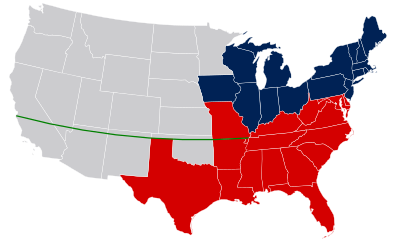
This act of legislative insight turned Clay into a national name and prompted him to be mentioned in newspapers across the country. Public perception was mixed but everyone had an opinion. The one thing no one knew was how Henry Clay himself felt about slavery, an institution that some believed he defended. In his writings, it was revealed Clay despised the practice of slavery yet owned them at the same time. Clay was in favor of slowly emancipating slaves on a state by state basis. Starting with the states that were less dependant on free labor and ultimately finishing with states like South Carolina that heavily relied on it. History tells us that this time did not occur in Henry's life and when he passed away, the nation was tired of waiting.
Henry Clay objected to slavery on a moral level but upheld it because of its economic importance to the South. Clay understood that the South was a goldmine for agriculture because two of the three factors of production were covered. With land being plentiful and labor being free, slave owners only had to concern themselves with capital.
Unfortunately, this dedication to saving the Southern economy caused Henry Clay to lose his footing. A political downfall occurred in 1850 with the aptly named Compromise of 1850. With Henry's original compromise in 1820 showing its age, a new compromise had to be reached when the state of California fell above and below the 36' 30 line. The nation was closer to war than ever before and the people looked to the "Great Compromiser" for one last solution.
The terms were grim, but the nation stayed united. In exchange for the free state of California, the North agreed to the Fugitive Slave Act which demanded that the North return slaves to the South if they escape. This was a hard pill to swallow for citizens and practically destroyed Clay's reputation. By this time, Clay had accepted defeat in his personal life and his health was declining.
As a sort of farewell to politics, Clay wrote a letter to his brother-in-law denouncing slavery and everything it stood for. He expressed regret and begged his relative to end the practice himself. It was only in the final years of his life that Clay realized the damage he had done through his compromises. This letter became famous as Northerners lacked belief in Clay's authenticity while Southerners lost respect for Clay after tearing down their institution. The Pindell Letter, named after his brother-in-law, Richard Pindell, made Clay an outcast to both parties.
After his death in 1852, Henry Clay released all of his slaves and paid for them to be educated. His final decisions reveal Clay to be a man of good intention who chose the evil of condoning slavery over a civil war. Unfortunately, Henry Clay was only able to delay the inevitable. On April 12, 1861 shots were fired at Fort Sumter and the Civil War had officially begun.
If you are interested in reading more about Henry Clay and his adventurous life in Congress please consider the following links:

No comments:
Post a Comment